
Opens in a new tab

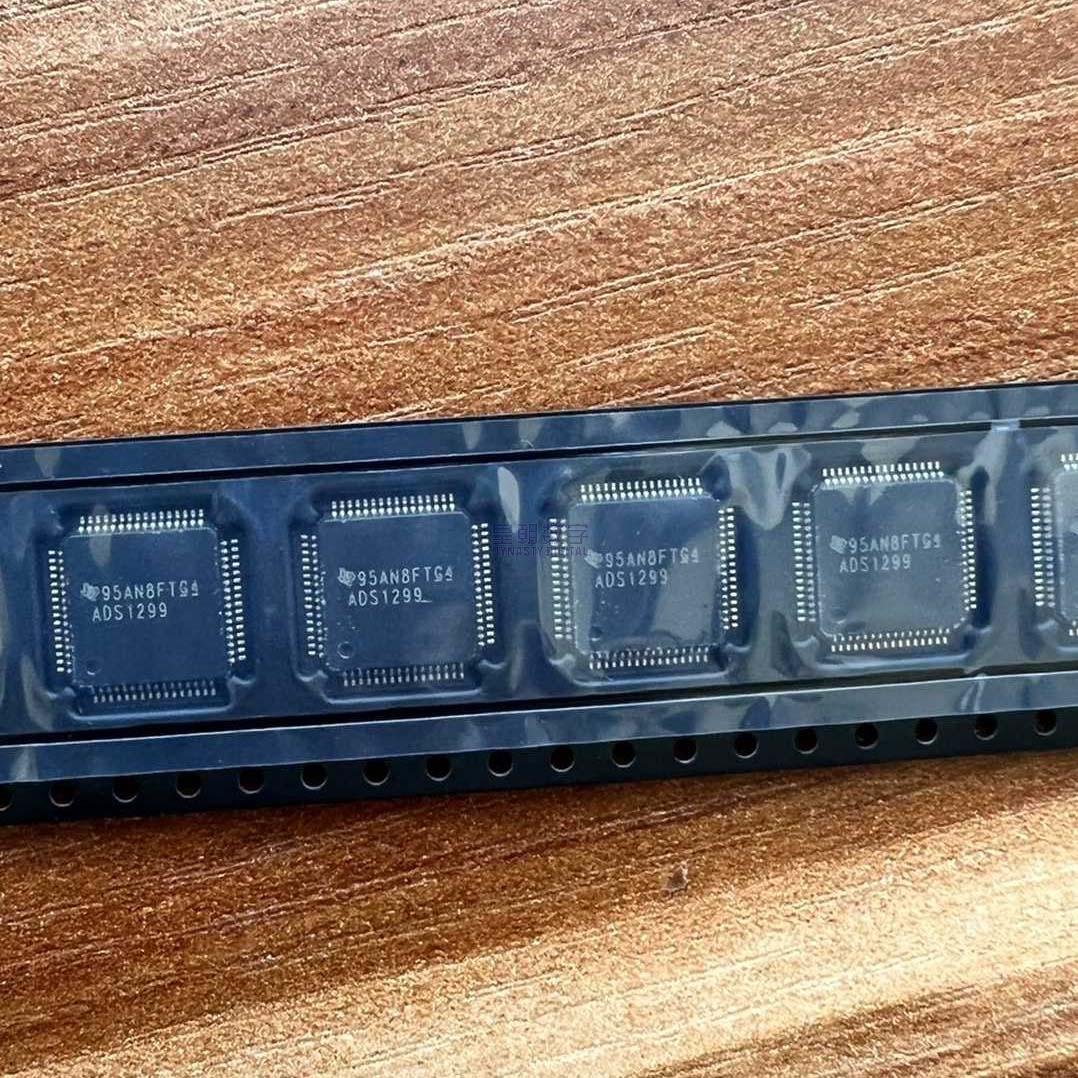
ADS1299IPAGR

8-channel 24-bit biopotential AFE, 1uVpp noise, 300pA bias current, 110dB CMRR, PGA 1-24x, 250-16kSPS, RLD bias drive, lead-off detect, SPI, 64-TQFP, TI ADS1299.

2800

Effective Inventory

Image for reference only

Manufacturer Part:

ADS1299IPAGR

Package:

64-Lead TQFP

Brand:

Quality Commitment

Shipping & Payment

Service & Packaging

Product Manual

Description

Product Overview

The ADS1299IPAGR is a low-noise, 8-channel, 24-bit analog front-end (AFE) for biopotential measurements from Texas Instruments. The device integrates eight low-noise programmable gain amplifiers (PGAs) and eight high-resolution 24-bit delta-sigma analog-to-digital converters (ADCs) with simultaneous sampling on all channels, making it ideal for electroencephalogram (EEG), electrocardiogram (ECG), electromyogram (EMG), and other biopotential measurement applications. With input-referred noise of only 1 microvolt peak-to-peak (70 Hz bandwidth) and input bias current of 300 pA, the ADS1299 provides the high sensitivity needed for recording small biopotential signals from the human body. The device includes built-in features such as a bias drive amplifier for driving the patient reference electrode, lead-off detection circuitry, test signal generation, and an internal oscillator. Communication is through a SPI-compatible interface with support for multi-device daisy-chaining. The ADS1299IPAGR is packaged in a 64-lead TQFP and operates over the commercial temperature range of 0C to +70C.

Key Specifications

Parameter Conditions Min Typ Max Unit
Number of Channels Simultaneous sampling 8 channels —
Resolution per Channel — — 24 — Bits
Input-Referred Noise 70 Hz bandwidth, GAIN=24 — 1 — µVpp
Input-Referred Noise Density 1 kHz, GAIN=24 — — 0.7 µVrms
Input Bias Current — — 300 1000 pA
CMRR (Common-Mode Rejection) DC to 60 Hz, GAIN=24 -110 -115 — dB
Programmable Gain Per channel 1, 2, 4, 6, 8, 12, 24 V/V
Data Rate All channels simultaneous 250 — 16000 SPS
Input Impedance — — 1000 — MΩ
Input Voltage Range ±(VREF/GAIN), differential ±2.4 V / gain V
Analog Supply (AVDD) Unipolar or bipolar 4.75 / ±2.375 5 / ±2.5 5.25 / ±2.625 V
Digital Supply (DVDD) — 1.7 1.8 3.6 V
Total Power Dissipation All channels active — 22.5 25 mW
Power-Down Current All channels powered down — 0.6 — µA
Internal Reference 4.5 V nominal 4.2 4.5 4.8 V
Internal Oscillator 2.048 MHz nominal — 2.048 — MHz
Bias Drive Amplifier Integrated RLD (Right Leg Drive) output —
Lead-Off Detection Per channel Current or pull-up/down resistor based —
Interface SPI-compatible 4-wire SPI, daisy-chain capable —
GPIO Pins General purpose I/O 4 GPIO pins —
Package 64-Lead TQFP (PAG, 10mm x 10mm, 0.5mm pitch) —
Operating Temperature PAG grade 0 — +70 degrees C

Features

  • 8 low-noise PGAs and 8 high-resolution 24-bit delta-sigma ADCs
  • Simultaneous sampling on all 8 channels
  • Input-referred noise: 1 µVpp (70 Hz bandwidth, GAIN=24)
  • Input bias current: 300 pA typical
  • Common-mode rejection ratio (CMRR): -110 dB
  • Programmable gain per channel: 1, 2, 4, 6, 8, 12, or 24 V/V
  • Data rates: 250 SPS to 16 kSPS
  • Unipolar or bipolar analog supply:
  • – 4.75V to 5.25V single supply
  • – ±2.375V to ±2.625V dual supply
  • Digital supply: 1.7V to 3.6V
  • Built-in bias drive (RLD) amplifier
  • Programmable lead-off detection
  • Internal test signal generator
  • Built-in oscillator (no external crystal required)
  • Internal or external reference
  • Flexible power-down and standby modes
  • Compatible with ADS129x family (pin compatible with ADS1298)
  • SPI-compatible serial interface
  • Daisy-chain mode for multi-device systems
  • 4 general-purpose I/O (GPIO) pins
  • 64-lead TQFP package
  • Commercial (0C to +70C) and industrial (-40C to +85C) options available

Applications

  • Electroencephalogram (EEG) measurement and brain-computer interfaces
  • Electrocardiogram (ECG/EKG) monitoring and diagnostics
  • Electromyogram (EMG) muscle activity measurement
  • Sleep monitoring and polysomnography
  • Fetal ECG monitoring
  • Medical instrumentation and patient monitoring
  • Wearable health and fitness devices
  • Biopotential measurement research and development
  • Evoked potential and EP measurement
  • \li>Portable medical and wellness devices
Product Introduction: ADS1299IPAGR Product Introduction

The ADS1299IPAGR is an 8-channel, low-noise, 24-bit analog front-end specifically designed for biopotential measurement applications such as EEG, ECG, EMG, and sleep monitoring. As a member of Texas Instruments ADS129x family of integrated biopotential AFEs, the ADS1299 integrates all the active components required to implement a complete 8-channel biopotential measurement system, significantly reducing board space, power consumption, and design complexity compared to discrete implementations. Each of the eight channels includes an input multiplexer (for selecting between electrode inputs, test signals, temperature sensor, and other internal signals), a low-noise programmable gain amplifier, and a 24-bit delta-sigma ADC. All channels sample simultaneously, ensuring precise time alignment across all inputs – essential for applications like EEG where phase relationships between channels carry diagnostic information. The ADS1299 achieves input-referred noise of only 1 microvolt peak-to-peak over a 70 Hz bandwidth at gain 24, which is well below the microvolt-level EEG signals it is designed to measure. The high CMRR of -110 dB effectively rejects common-mode interference such as 50/60Hz power line noise that is typically picked up by body-worn electrodes. The built-in right leg drive (RLD) amplifier further improves common-mode rejection by actively driving the patient reference electrode to cancel out common-mode voltage. Integrated lead-off detection circuitry monitors electrode impedance to detect loose or disconnected electrodes, a critical feature for reliable patient monitoring. The device also includes an internal test signal generator for self-test and verification without external stimulus. Communication is through a standard SPI interface, and daisy-chain mode allows multiple ADS1299 devices to share a single SPI bus for applications requiring more than 8 channels. The ADS1299IPAGR is the PAG-grade (commercial, 0C to +70C) 64-lead TQFP package version. An industrial temperature grade (-40C to +85C) is also available.

Working Principle: ADS1299IPAGR Working Principle

The ADS1299 is a highly integrated biopotential analog front end that combines multiple signal conditioning and data conversion channels on a single chip. Each of the eight independent channels begins with an input multiplexer that selects the signal source for that channel – this can be the external electrode input, an internal test signal, the temperature sensor output, or a shorted input for offset measurement. Following the MUX is a low-noise programmable gain amplifier that amplifies the biopotential signal. The gain is independently configurable per channel from 1 to 24, allowing optimization of dynamic range for different signal types (e.g., ECG uses lower gain, EEG uses higher gain). The PGA is designed for extremely low input noise (achieving 1 µVpp at gain 24) and very low input bias current (300 pA), both of which are critical for high-sensitivity biopotential measurements where electrode-tissue interface impedance can be very high. After the PGA, the amplified signal is digitized by a 24-bit second-order delta-sigma modulator per channel. All eight modulators operate in parallel and synchronously, so all eight channels sample at exactly the same time. The modulators are followed by third-order sinc digital decimation filters that convert the high-rate bitstreams from the modulators into 24-bit output words at the selected data rate. The data rate is programmable from 250 SPS to 16 kSPS. The RLD (right leg drive) amplifier is a key feature for biopotential measurement: it senses the common-mode voltage present on all the input electrodes, inverts it, and drives it back to the patient through a reference electrode. This negative feedback actively cancels common-mode interference (especially 50/60Hz power line noise), dramatically improving the effective CMRR of the system. The lead-off detection function works by sourcing or sinking small currents through each electrode input; if the electrode impedance is too high (indicating poor contact), the resulting voltage will be outside the normal range, and the device flags this condition. The device also includes an internal oscillator, internal voltage reference, and power management circuitry that allows individual channels to be powered down when not needed, reducing total power consumption. All configuration and data transfer is handled through the SPI interface, with DRDY pins indicating when new conversion data is available.

Pin Description: ADS1299IPAGR Pin Definition and Functions
Pin No. Name Type Description
1-8 IN1P-IN8P Analog input Positive input for channels 1 through 8. Connect to electrode signals.
9-16 IN1N-IN8N Analog input Negative input for channels 1 through 8. Connect to reference/common (SRB or BIAS).
17 SRB1 Analog I/O Sense Resistor Bias 1. Can connect to all INnP inputs via MUX for common reference.
18 SRB2 Analog I/O Sense Resistor Bias 2. Can connect to all INnN inputs via MUX for common reference.
19 RLD_OUT Analog output Right leg drive amplifier output. Connect to patient reference/ground electrode.
20 RLD_IN Analog input Right leg drive amplifier inverting input. Feedback connection for RLD circuit.
21-24 GPIO0-GPIO3 Digital I/O General purpose digital I/O pins, configurable as input or output.
25-28 AGND Ground Analog ground pins. Connect to analog ground plane.
29-32 AVDD Analog supply Analog positive supply (4.75V to 5.25V).
33 VREFP Analog I/O Positive reference output/input. Internal 4.5V reference output, or external reference input.
34 VREFN Analog Negative reference. Connect to AGND for single-ended reference.
35 TEST_TONE Digital I/O Test clock input / test tone output. For generating calibration/test signals.
36 CLKSEL Digital input Clock select. Low = internal oscillator, High = external clock.
37 CLK Digital I/O Clock output or external clock input (2.048 MHz nominal).
38 START Digital input Conversion start. Rising edge starts conversions when in command mode.
39 RESET Digital input Power-on reset (active low). Reset all registers to default values.
40-43 DGND Ground Digital ground pins.
44 DVDD Digital supply Digital power supply (1.7V to 3.6V).
45 CS Digital input Chip select (active low) for SPI interface.
46 SCLK Digital input SPI serial clock input.
47 DIN Digital input SPI serial data input.
48 DOUT Digital output SPI serial data output.
49 DRDY Digital output Data ready. Active low when all channel data is ready to read.
50 PWDN/RESET Digital input Power-down / reset. Low = power-down mode.
51-64 BIASINV to MISC Various Bias inverting input, bias sense, bias output, and other pins for BIAS amplifier and additional functions.
Application Scenarios: In which products and applications is ADS1299IPAGR used
  • Clinical and research EEG (electroencephalogram) recording systems
  • Brain-computer interface (BCI) devices and neurofeedback systems
  • ECG/EKG monitors and cardiac diagnostic equipment
  • EMG (electromyography) muscle activity measurement
  • Sleep study equipment and polysomnography
  • Fetal monitoring and fetal ECG
  • Wearable health monitoring devices
  • Portable medical diagnostics and point-of-care testing
  • Biomedical research and neuroscience laboratory equipment
  • Evoked potential (EP) and event-related potential (ERP) measurement
Alternative Models: What chips are recommended as replacements for ADS1299IPAGR
Model Manufacturer Key Difference
ADS1299IPAG Texas Instruments Tube packaging (vs reel), same device, non-reel quantity
ADS1298IPAG Texas Instruments 8-channel ECG-specific AFE with integrated pacemaker detection and respiration
ADS1296IPAG Texas Instruments 6-channel version, lower channel count, lower cost
ADS1295IPAG Texas Instruments 5-channel version with respiration impedance measurement
ADAS1000 Analog Devices 5-channel ECG AFE with pacemaker detection, ADI alternative for biopotential applications

Recommend Parts

ISO1176TDWR

Isolated RS-485 transceiver, 40Mbps, integrated transformer driver, SOIC-16

Brand: TI

Package: SOIC-16 (DW, wide-body, 10.3 x 10.3 mm)

IN STOCK: 6874pcs

Cargo cycle: 3-7 Days

The minimum order is 1

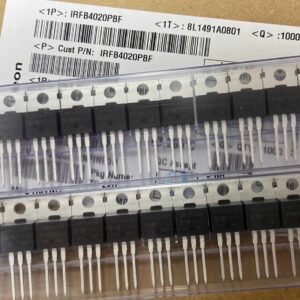
IRFB4020PBF

200V N-Channel HEXFET Power MOSFET, 31A, 68 mΩ RDS(on), TO-220AB

Brand: infineon

Package: TO-220AB

IN STOCK: 14149pcs

Cargo cycle: 3-7 Days

The minimum order is 1

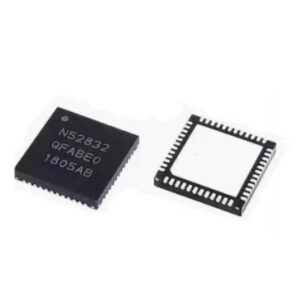
NRF52832-QFAA-T

Nordic BLE SoC, ARM Cortex-M4 @ 64MHz, 64KB Flash, 32KB RAM, QFN-48

Package: See datasheet

IN STOCK: 10958pcs

Cargo cycle: 3-7 Days

The minimum order is 1

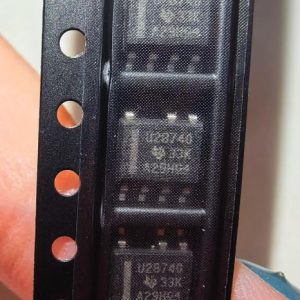
UCC28740DR

CVCC Flyback Controller, 700V startup, opto feedback, <10mW no-load, SOIC-7

Brand: TI

Package: SOIC-7 (4.9 x 3.9 x 1.75 mm)

IN STOCK: 4840pcs

Cargo cycle: 3-7 Days

The minimum order is 1

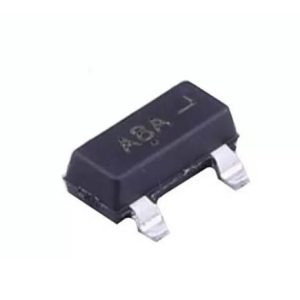
MMUN2211LT1G

NPN digital transistor, R1=10kΩ R2=10kΩ, 50V, 100mA, SOT-23-3, pre-biased BRT switch

Brand: Onsemi

Package: SOT-23-3 (TO-236, SC-59)

IN STOCK: 8500pcs

Cargo cycle: 3-7 Days

The minimum order is 1

TMS320F2810PBKA

C2000 Delfino DSP controller, 150MHz, 128KB Flash, BGA-179

Brand: TI

Package: BGA-179 (16 x 16 mm, PBK package)

IN STOCK: 3124pcs

Cargo cycle: 3-7 Days

The minimum order is 1