Opens in a new tab

SN74LS148N

8-to-3 priority encoder, active-low, cascade EI/EO/GS, LS TTL, PDIP-16

4500

Effective Inventory

Image for reference only

Manufacturer Part:

SN74LS148N

Package:

PDIP-16 (19.3 x 6.35 x 4.57mm, 2.54mm pitch, through-hole)

Brand:

Quality Commitment

Shipping & Payment

Service & Packaging

Product Manual

Description

Product Overview

The SN74LS148N is an 8-line to 3-line priority encoder from Texas Instruments with active-low inputs/outputs, cascading capability, and group signal outputs in a 16-pin PDIP package.

Key Specifications

Function 8-line to 3-line priority encoder
Logic Family LS (Low-power Schottky)
Supply Voltage 4.75V to 5.25V (5V nominal)
Inputs 8 active-low (0-7), 1 enable (EI, active-low)
Outputs 3 active-low (A2, A1, A0), GS, EO
Priority Input 7 is highest priority
Propagation Delay 15ns typical (data to output)
Enable Input (EI) Active-low (device enabled when EI=LOW)
Group Signal (GS) Active-low (asserted when any input is active)
Enable Output (EO) Active-low (asserted when no input is active)
Operating Temperature 0°C to +70°C
Package PDIP-16 (19.3 x 6.35mm)

Features

  • 8-line to 3-line priority encoder with active-low I/O
  • Priority: input 7 has highest, input 0 lowest
  • Cascading via EI and EO for expanded encoding
  • Group signal (GS) indicates at least one active input
  • Enable input (EI) for device selection
  • Standard 74LS148 pinout

Applications

  • Keyboard encoding
  • Interrupt vector generation
  • Priority interrupt encoding for CPUs
  • Data compression and encoding
  • Cascaded multi-chip encoding systems
Product Introduction: SN74LS148N Product Introduction

The SN74LS148N from Texas Instruments is an 8-line to 3-line priority encoder that converts one of eight active-low input lines to a 3-bit binary output code. When multiple inputs are active simultaneously, the encoder outputs the code for the highest-priority input (input 7 is highest, input 0 is lowest). All inputs and outputs are active-low, simplifying connection to microprocessor interrupt systems that use active-low signals. The enable input (EI, active-low) activates the device; when EI is HIGH, all outputs are HIGH (inactive). The group signal (GS) output goes LOW when any input is active and the device is enabled, indicating a valid encoded output. The enable output (EO) goes LOW only when no inputs are active and the device is enabled. GS and EO facilitate cascading: for a 16-to-4 encoder, two 148s are used with the lower-priority device’s EO connected to the higher-priority device’s EI. The N suffix denotes the PDIP-16 through-hole package.

Working Principle: SN74LS148N Working Principle

The SN74LS148N continuously evaluates the eight input lines (0-7, active-low). If input 7 is LOW (active), the outputs A2,A1,A0 = L,L,L (binary 7, active-low encoded as 000) regardless of the states of inputs 0-6. If input 7 is HIGH (inactive) and input 6 is LOW, the outputs = L,L,H (binary 6). This priority chain continues down to input 0, which only gets encoded if no higher-priority input is active. When the enable input (EI) is HIGH, the device is disabled: all data outputs (A0-A2) are HIGH, GS is HIGH, and EO is HIGH. When EI is LOW and at least one input is active, GS = LOW (indicating a valid encoding) and EO = HIGH. When EI is LOW and no inputs are active, GS = HIGH and EO = LOW. For cascading two devices to create a 16-to-4 encoder: the higher-priority device (inputs 8-15) has its EI connected to the system enable, and its EO connected to the lower-priority device’s EI. The GS outputs of both devices are NANDed to form the MSB (A3) of the 4-bit output. The A0-A2 outputs of both devices are ORed (wire-AND for active-low) to form the lower 3 bits.

Pin Description: SN74LS148N Pin Definition and Functions
Pin Name Type Description
1 4 Input Input line 4 (active low)
2 5 Input Input line 5 (active low)
3 6 Input Input line 6 (active low)
4 7 Input Input line 7 (active low, highest priority)
5 EO Output Enable output (active low, =LOW when no input active)
6 GS Output Group signal (active low, =LOW when any input active)
7 A2 Output Encoded output MSB (active low)
8 GND Power Ground
9 A1 Output Encoded output middle bit (active low)
10 A0 Output Encoded output LSB (active low)
11 0 Input Input line 0 (active low, lowest priority)
12 1 Input Input line 1 (active low)
13 2 Input Input line 2 (active low)
14 3 Input Input line 3 (active low)
15 EL Input Enable input (active low)
16 VCC Power Supply (4.75V to 5.25V)
Application Scenarios: In which products and applications is SN74LS148N used
  • Interrupt Encoder: 8 interrupt sources into 3-bit vector; GS connects to MCU /IRQ pin; A0-A2 read as interrupt ID
  • Keyboard Encoder: 8 keys into 3-bit code; priority resolves simultaneous key presses
  • 16-Input Encoder: Cascade two 148s for 16-to-4 encoding; higher-priority EO drives lower EI
  • Priority Detection: GS output indicates any request; MCU reads A0-A2 only when GS=LOW
  • Data Compression: Encode 8 binary inputs into 3 bits for bus width reduction
Alternative Models: What chips are recommended as replacements for SN74LS148N
Model Manufacturer Key Difference Package Supply
74LS148N TI/Nexperia Original TTL version with 5V-only supply, typical propagation delay 10-15ns DIP-16 5V TTL
74LS148D TI/Nexperia Surface-mount SOIC version of LS with identical logic function SOIC-16 5V TTL
74HC148D TI/Nexperia CMOS version with wide 2-6V supply range, lower power consumption and higher noise immunity SOIC-16 2-6V CMOS
74HC148N TI/Nexperia Through-hole DIP version of HC family for prototyping and repair DIP-16 2-6V CMOS
74HCT148D TI/Nexperia CMOS with TTL-compatible input levels, ideal for mixing with LS devices at 5V SOIC-16 4.5-5.5V TTL-in
74HCT148N TI/Nexperia Through-hole DIP version of HCT family for prototyping and repair DIP-16 4.5-5.5V TTL-in

The 74148 is a 8-Line to 3-Line Priority Encoder. Family variants span from the original LS TTL (5V only) to modern LVC/AUP (down to 0.8V). HC and HCT versions offer 2-6V CMOS operation with HCT providing TTL-compatible input thresholds for mixed 5V systems. CD4000-series equivalents offer the widest 3-18V supply range at the cost of lower switching speed. DIP packages (N suffix) are through-hole; SOIC (D suffix) and TSSOP are surface-mount.

Recommend Parts

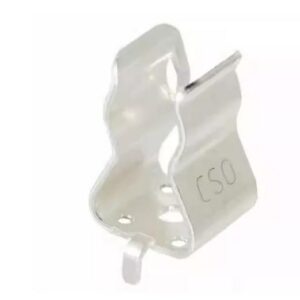
0751.0505

Schurter fuse, 0751.0505

Brand: schurter

Package: See datasheet

IN STOCK: 6768pcs

Cargo cycle: 3-7 Days

The minimum order is 1

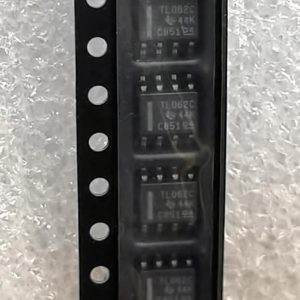
TL062CDR

Low-power JFET-input dual op-amp, 1MHz GBW, 30pA Ibias, SOIC-8, ±3.5V to ±18V

Brand: TI

Package: SOIC-8 (3.9 x 4.9 x 1.75mm)

IN STOCK: 11576pcs

Cargo cycle: 3-7 Days

The minimum order is 1

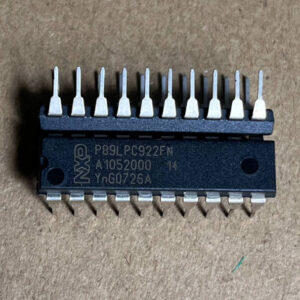
P89LPC922FN

8-bit 80C51 MCU, 8KB Flash, 256B RAM, 20-SSOP

Brand: NXP

Package: SSOP-20 (7.2 x 5.3 mm)

IN STOCK: 12628pcs

Cargo cycle: 3-7 Days

The minimum order is 1

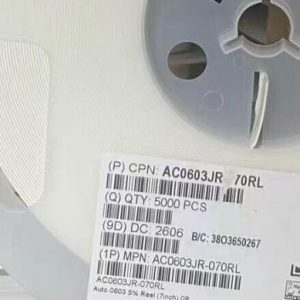
AC0603JR-070RL

Chip Resistor, 0Ω (Zero Ohm Jumper), ±5%, 0603 (1608 Metric), 1/10W (100mW)

Brand: Yageo

Package: 0603 (1608 Metric)

IN STOCK: 100000pcs

Cargo cycle: 3-7 Days

The minimum order is 1

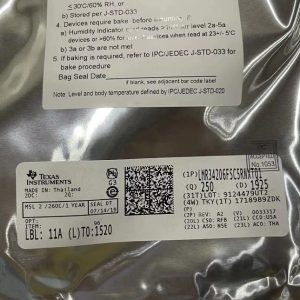
LMR34206FSC5RNXRQ1

42V 2A sync buck, 5V fixed, 2.2MHz, 18uA Iq, AEC-Q100, SOT-563

Brand: TI

Package: SOT-563 (1.6 x 1.2 x 0.55mm)

IN STOCK: 6500pcs

Cargo cycle: 3-7 Days

The minimum order is 1

AO3402

30V N-channel trench MOSFET, SOT-23, 4A, RDS(on) 52m ohm max @ 10V, Qg 10nC, 2.5V gate drive capable, -55C to +150C.

Brand: aosmd

Package: SOT-23 (2.9 x 1.6 x 1.25mm)

IN STOCK: 14066pcs

Cargo cycle: 3-7 Days

The minimum order is 1