Opens in a new tab

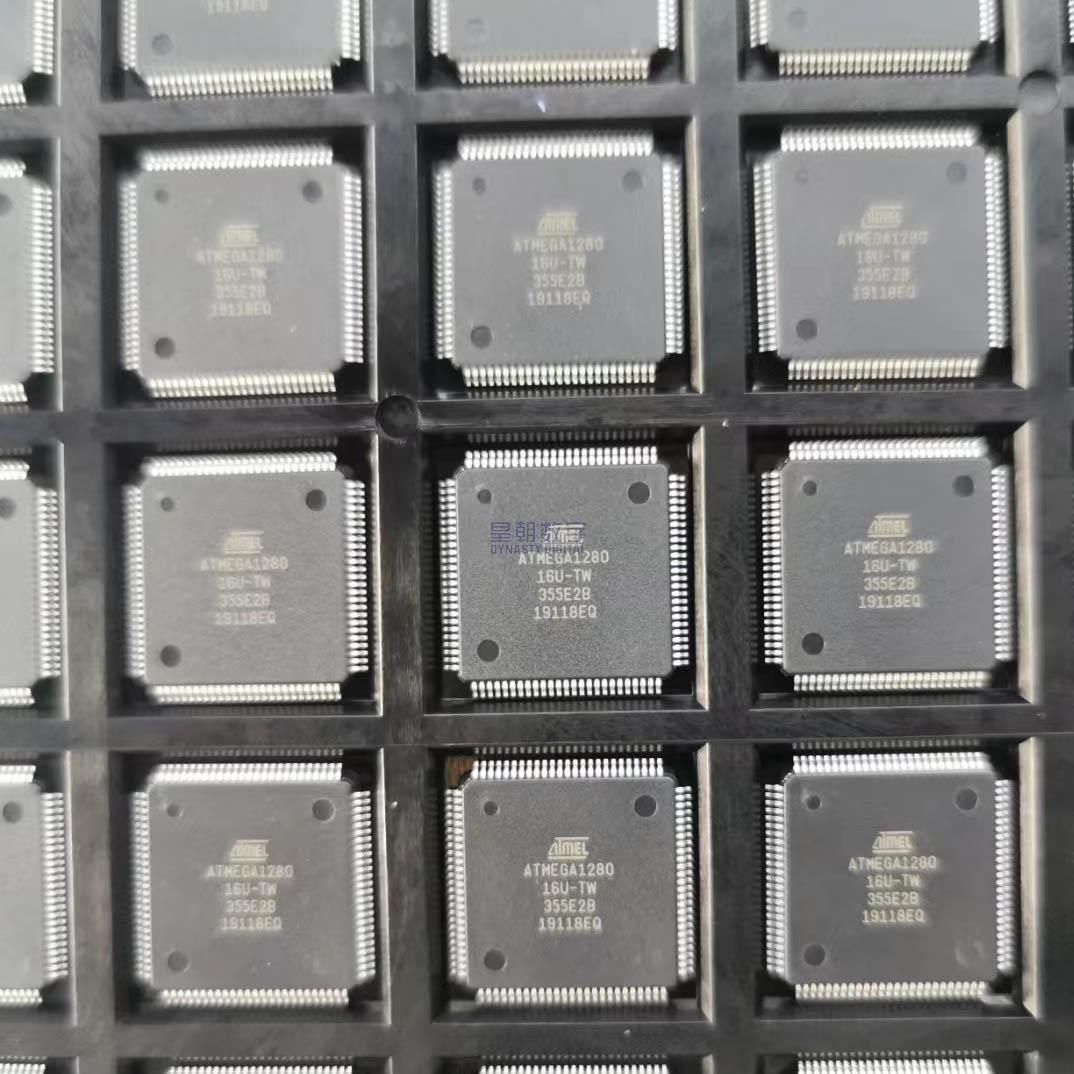
ATMEGA1280-16AU

8-bit AVR MCU, 128KB Flash, 8KB SRAM, 4KB EEPROM, 86 I/O, 16MHz/16MIPS, 6 timers, 4 USARTs, 16-ch 10-bit ADC, JTAG debug, TQFP-100, Atmel ATMEGA1280-16AU, Arduino Mega.

3200

Effective Inventory

Image for reference only

Manufacturer Part:

ATMEGA1280-16AU

Package:

TQFP-100 (14x14mm)

Quality Commitment

Shipping & Payment

Service & Packaging

Product Manual

Description

Product Overview

The ATMEGA1280-16AU is a high-performance, low-power 8-bit AVR RISC-based microcontroller from Atmel (now Microchip). Featuring 128KB of ISP Flash memory, 8KB of SRAM, and 4KB of EEPROM, this device is the 100-pin version of the popular ATmega series — famously used as the core of the Arduino Mega development board. The ATmega1280 achieves a throughput of 16 MIPS at 16MHz by executing powerful instructions in a single clock cycle. The device provides an extensive set of peripherals including 86 general purpose I/O lines, six flexible timer/counters with compare modes and PWM, four USARTs, a byte-oriented Two-Wire serial interface (I2C), a 16-channel 10-bit A/D converter, and a JTAG interface for on-chip debugging. The JTAG interface also provides boundary-scan capabilities and programming of Flash, EEPROM, fuses, and lock bits. Additional features include an on-chip analog comparator, internal calibrated RC oscillator, power-on reset, programmable brown-out detection, and six sleep modes. Operating from 2.7V to 5.5V, the ATmega1280-16AU is packaged in a 100-pin TQFP (14x14mm) and supports industrial temperature range (-40 to +85°C). With its abundant I/O and rich peripheral set, the ATmega1280 is ideal for complex embedded projects requiring numerous connections and communication interfaces.

Key Specifications

Parameter Conditions Min Typ Max Unit
Core Architecture 8-bit AVR RISC
Clock Frequency 16AU speed grade 0 16 MHz
Throughput @ 16MHz 16 MIPS
Instruction Set 133 instructions, most single-cycle
Working Registers General purpose 32 x 8-bit
Flash Program Memory ISP 128 KB (64K x 16)
Flash Endurance 10000 cycles
Boot Loader Section Independent lock bits Yes (optional Boot Code)
SRAM (Internal RAM) 8 KB (8192 bytes)
EEPROM Data storage 4 KB (4096 bytes)
EEPROM Endurance 100000 cycles
I/O Pins 86 general purpose I/O lines
I/O Ports 11 ports (PA-PK, plus additional)
Timer/Counter Total 6 timer/counters
8-bit Timer/Counter 0 With prescaler, compare mode 1 (T/C0)
8-bit Timer/Counter 2 Async capable 1 (T/C2)
16-bit Timer/Counter 1 3 compare, 1 capture 1 (T/C1)
16-bit Timer/Counter 3 3 compare, 1 capture 1 (T/C3)
16-bit Timer/Counter 4 3 compare, 1 capture 1 (T/C4)
16-bit Timer/Counter 5 3 compare, 1 capture 1 (T/C5)
PWM Channels 15 PWM channels (standalone)
USART Full duplex 4 USARTs (USART0-USART3)
SPI Master/Slave 1 SPI interface
Two-Wire Interface (TWI) I2C compatible 1 TWI
ADC Resolution Successive approximation 10-bit
ADC Channels Single-ended 16 channels
Analog Comparator 1 (on-chip)
Watchdog Timer Programmable, on-chip osc Yes
Real Time Counter Separate oscillator Yes (RTC)
JTAG Interface IEEE 1149.1 Yes (boundary scan + debug)
External Interrupts 8 external interrupt pins
Interrupt Sources Multiple, with 4-level priority
Power-On Reset Yes (POR)
Brown-out Detection Programmable Yes (BOD)
Internal RC Oscillator Calibrated Yes (8MHz)
Operating Voltage 2.7 5.5 V
Sleep Modes 6 modes (Idle, ADC NR, Power-save, Power-down, Standby, Ext Standby)
Operating Temperature Industrial -40 +85 °C
Package TQFP-100 (14x14mm)

Features

  • High-performance, low-power AVR 8-bit RISC architecture
  • 133 powerful instructions — most single clock cycle execution
  • 32 x 8 general purpose working registers
  • 16 MIPS throughput at 16 MHz
  • On-chip 2-cycle multiplier
  • 128KB In-System Programmable (ISP) Flash
  • 10,000 Flash write/erase cycles
  • Optional Boot Code section with independent lock bits
  • True Read-While-Write operation
  • 8KB internal SRAM
  • 4KB EEPROM (100,000 write cycles)
  • Up to 64KB optional external memory space
  • Programming lock for software security
  • JTAG (IEEE std. 1149.1 compliant) interface
  • Boundary-scan capabilities
  • Extensive on-chip debug support
  • 86 programmable I/O lines
  • Two 8-bit Timer/Counters with separate prescalers
  • Four 16-bit Timer/Counters with compare and capture modes
  • Real Time Counter with separate oscillator
  • 15 PWM channels with programmable resolution
  • 16-channel 10-bit ADC
  • Byte-oriented Two-Wire serial interface (I2C)
  • Four programmable serial USARTs
  • Master/Slave SPI serial interface
  • Programmable Watchdog Timer with on-chip oscillator
  • On-chip analog comparator
  • Power-on Reset and programmable Brown-out Detection
  • Internal calibrated RC oscillator
  • Six software-selectable sleep modes
  • QTouch library support (capacitive touch)
  • Wide operating voltage: 2.7V to 5.5V
  • Industrial temperature range (-40 to +85°C)
  • 100-pin TQFP (14x14mm) package

Applications

  • Arduino Mega-compatible projects
  • Industrial control systems
  • Robotics and mechatronics
  • 3D printers and CNC machines
  • Home automation and smart home
  • IoT gateway devices
  • Data acquisition and logging
  • Motor and servo control
  • LCD and touchscreen interfaces
  • Medical devices
  • Automotive systems
  • Consumer electronics
  • Educational platforms
Product Introduction: ATMEGA1280-16AU Product Introduction

The ATMEGA1280-16AU is a high-performance 8-bit AVR RISC microcontroller from Atmel (now Microchip Technology), well-known as the core processor of the Arduino Mega development board. It combines 128KB of in-system programmable Flash memory, 8KB of SRAM, and 4KB of EEPROM with a rich set of peripherals in a 100-pin TQFP package. The AVR core achieves 16 MIPS throughput at 16MHz by executing most instructions in a single clock cycle, featuring 32 general purpose working registers directly connected to the ALU for efficient operation. A key advantage of the ATmega1280 is its extensive I/O capability: 86 general purpose I/O lines supporting numerous simultaneous peripheral connections. The device includes six timer/counters (two 8-bit and four 16-bit), providing 15 PWM channels for motor control, LED dimming, and other applications requiring pulse-width modulation. Four full USARTs enable multiple serial communication connections simultaneously — a significant upgrade from smaller AVRs with just one or two UARTs. Additional communication interfaces include SPI and TWI (I2C compatible). The 16-channel 10-bit ADC supports both single-ended and differential measurements. The JTAG interface provides boundary-scan testing, on-chip debugging, and in-system programming of Flash, EEPROM, fuses, and lock bits. System management features include power-on reset (POR), programmable brown-out detection (BOD), internal calibrated RC oscillator, watchdog timer, real-time counter, and six sleep modes for power optimization. Operating from 2.7V to 5.5V with industrial temperature range (-40 to +85°C), the ATmega1280-16AU is the ’16AU’ variant: 16MHz maximum frequency, industrial temperature, and TQFP-100 green package. Its extensive peripheral set makes it ideal for complex projects requiring multiple serial ports, numerous PWM outputs, and many I/O connections — including 3D printers, CNC controllers, robotics, data loggers, and industrial automation systems.

Working Principle: ATMEGA1280-16AU Working Principle

The ATmega1280 is based on the AVR enhanced RISC architecture, which uses a Harvard architecture with separate program and data buses. The 8-bit CPU fetches instructions from the 128KB Flash program memory via a 16-bit program memory bus, while data is accessed through a separate 8-bit data bus connected to the 8KB SRAM and 4KB EEPROM. Thirty-two general purpose working registers (R0-R31) are directly connected to the Arithmetic Logic Unit (ALU), allowing two independent registers to be accessed in a single instruction executed in one clock cycle — this is the key to the AVR’s high code efficiency and performance. The program counter addresses the Flash memory sequentially, with 2-byte instructions (most instructions) being fetched and executed in a single clock cycle at frequencies up to 16MHz. The Boot Loader section of Flash contains independently lockable code that can program the Application Flash section via any interface (SPI, UART, etc.), enabling in-system programming without external hardware. The six timer/counters provide flexible timing and PWM generation: Timer/Counter 0 and 2 are 8-bit with PWM support, while Timer/Counter 1, 3, 4, and 5 are 16-bit units each with three output compare units and one input capture unit, enabling up to 15 independent PWM channels. The four USARTs support standard asynchronous serial communication with hardware flow control options. The 10-bit successive approximation ADC multiplexes 16 analog input channels, supporting single-ended and differential measurements. The Advanced Interrupt Controller manages multiple interrupt sources with individual enable/disable and four-level priority. The JTAG interface (TCK, TMS, TDI, TDO) supports IEEE 1149.1 boundary-scan testing and provides access to the On-chip Debug system for real-time emulation and Flash programming. The Power Reduction Register allows individual peripherals to be powered down to save energy. Six sleep modes provide graduated power savings: Idle mode stops the CPU while keeping peripherals running; Power-down mode saves register state but halts the oscillator for minimum current; Power-save mode keeps the asynchronous timer running for wake-up scheduling.

Pin Description: ATMEGA1280-16AU Pin Definition and Functions

The ATmega1280 is packaged in a 100-pin TQFP (14x14mm). Major pin groups include:

Port/Pin Group Description
Port A (PA0-PA7) 8-bit bidirectional I/O with internal pull-ups / ADC inputs A0-A7
Port B (PB0-PB7) 8-bit bidirectional I/O / SPI (SS, MOSI, MISO, SCK), PWM channels
Port C (PC0-PC7) 8-bit bidirectional I/O / TWI (SDA, SCL)
Port D (PD0-PD7) 8-bit bidirectional I/O / USART0, INT0-INT3, PWM
Port E (PE0-PE7) 8-bit bidirectional I/O / USART1, PWM
Port F (PF0-PF7) 8-bit bidirectional I/O / ADC8-ADC15, JTAG (TMS, TDO, TDI, TCK)
Port G (PG0-PG5) 6-bit bidirectional I/O / PWM, External memory interface
Port H (PH0-PH7) 8-bit bidirectional I/O / USART2, PWM
Port J (PJ0-PJ6) 7-bit bidirectional I/O / USART3
Port K (PK0-PK7) 8-bit bidirectional I/O / ADC0-ADC7, AREF, AVCC
Port L (PL0-PL7) 8-bit bidirectional I/O / PWM
Power Pins VCC, AVCC, AREF, multiple GND pins
Reset RESET (active low)
Oscillator XTAL1, XTAL2

Total: 11 ports × varying widths = 86 I/O pins. Some pins serve multiple functions via multiplexing.

Application Scenarios: In which products and applications is ATMEGA1280-16AU used
  • Arduino Mega compatible development boards and projects
  • 3D printers (RAMPS, Marlin firmware)
  • CNC controllers and motion systems
  • Robotics and autonomous vehicles
  • Industrial automation and control panels
  • Data acquisition systems and data loggers
  • Home automation and smart home hubs
  • IoT gateway devices
  • Motor and servo control systems
  • LCD/OLED/TFT display interfaces
  • Medical devices and instruments
  • Educational and research platforms
Alternative Models: What chips are recommended as replacements for ATMEGA1280-16AU
Model Manufacturer Key Difference
ATMEGA2560-16AU Atmel/Microchip 256KB Flash (double), same pinout – Arduino Mega 2560
ATMEGA1281-16AU Atmel 128KB Flash, TQFP-64 (smaller package, fewer I/O)
ATMEGA640-16AU Atmel 64KB Flash, same TQFP-100 package
ATmega2561 Atmel 256KB Flash, 64-pin version
STM32F103ZE STMicroelectronics Cortex-M3 ARM alternative, 512KB Flash, LQFP-144

Recommend Parts

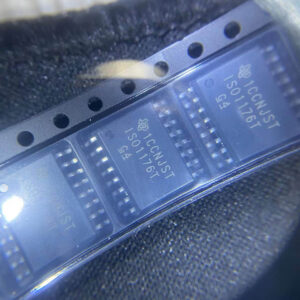
ISO1176TDWR

Isolated RS-485 transceiver, 40Mbps, integrated transformer driver, SOIC-16

Brand: TI

Package: SOIC-16 (DW, wide-body, 10.3 x 10.3 mm)

IN STOCK: 6874pcs

Cargo cycle: 3-7 Days

The minimum order is 1

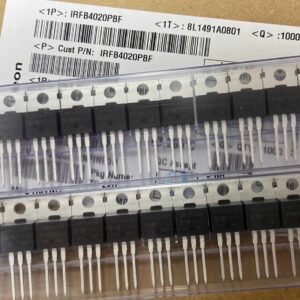
IRFB4020PBF

200V N-Channel HEXFET Power MOSFET, 31A, 68 mΩ RDS(on), TO-220AB

Brand: infineon

Package: TO-220AB

IN STOCK: 14149pcs

Cargo cycle: 3-7 Days

The minimum order is 1

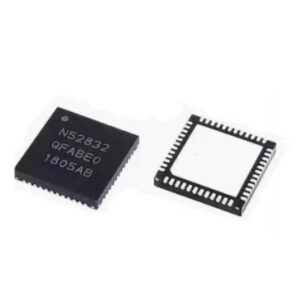
NRF52832-QFAA-T

Nordic BLE SoC, ARM Cortex-M4 @ 64MHz, 64KB Flash, 32KB RAM, QFN-48

Package: See datasheet

IN STOCK: 10958pcs

Cargo cycle: 3-7 Days

The minimum order is 1

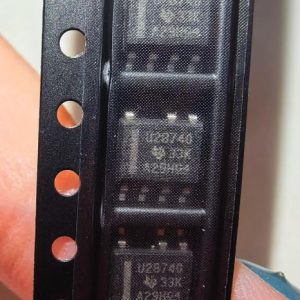
UCC28740DR

CVCC Flyback Controller, 700V startup, opto feedback, <10mW no-load, SOIC-7

Brand: TI

Package: SOIC-7 (4.9 x 3.9 x 1.75 mm)

IN STOCK: 4840pcs

Cargo cycle: 3-7 Days

The minimum order is 1

MMUN2211LT1G

NPN digital transistor, R1=10kΩ R2=10kΩ, 50V, 100mA, SOT-23-3, pre-biased BRT switch

Brand: Onsemi

Package: SOT-23-3 (TO-236, SC-59)

IN STOCK: 8500pcs

Cargo cycle: 3-7 Days

The minimum order is 1

TMS320F2810PBKA

C2000 Delfino DSP controller, 150MHz, 128KB Flash, BGA-179

Brand: TI

Package: BGA-179 (16 x 16 mm, PBK package)

IN STOCK: 3124pcs

Cargo cycle: 3-7 Days

The minimum order is 1