Opens in a new tab

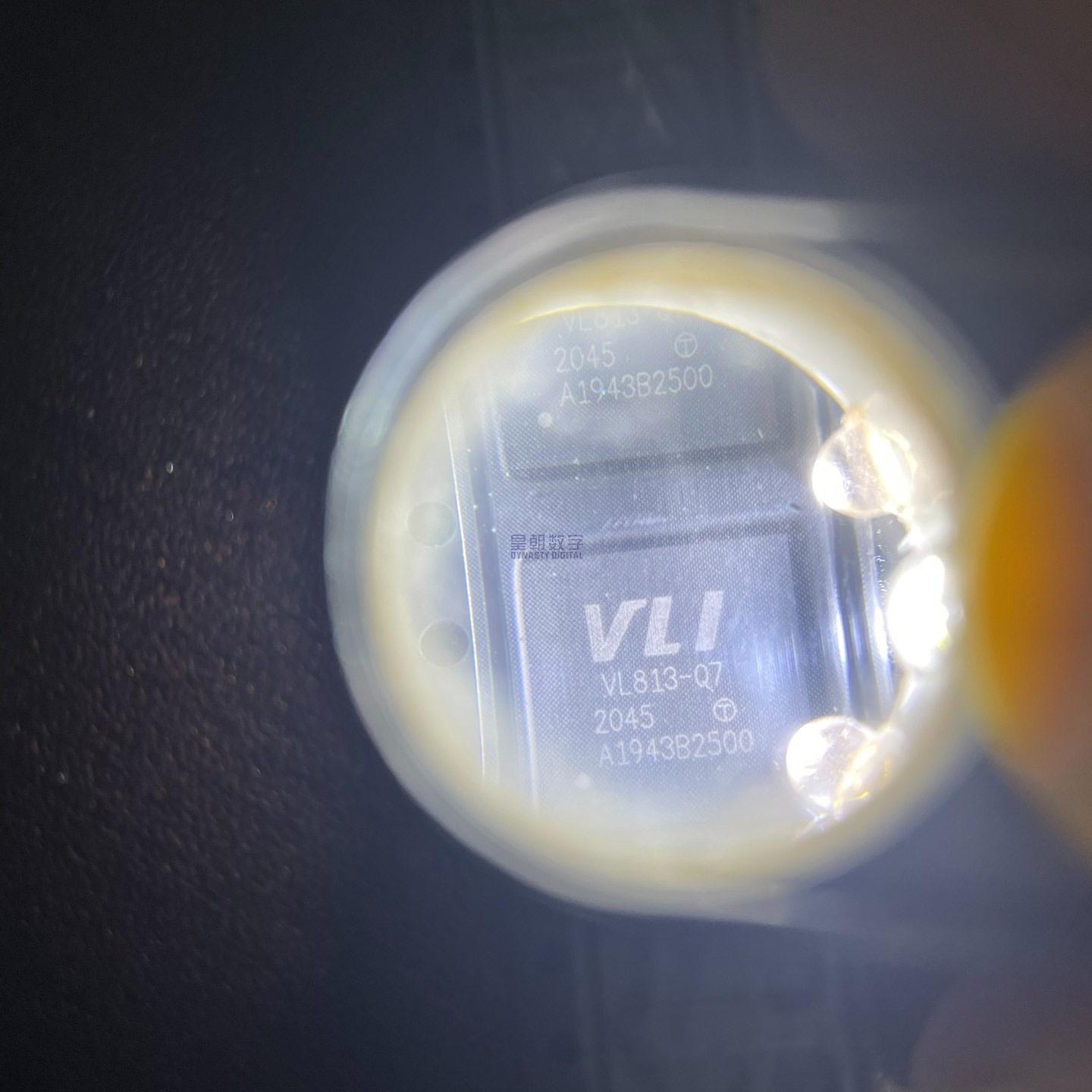
VL813-Q7

4-port USB 3.0 SuperSpeed hub controller, 5Gbps, QFN-76, BC1.2 charging, MTT USB 2.0, VIA Labs VL813 series

4200

Effective Inventory

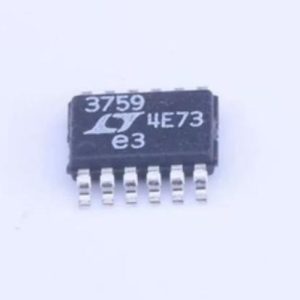
Image for reference only

Manufacturer Part:

VL813-Q7

Package:

QFN-76 (76-pin quad flat no-lead, 9x9mm body, 0.4mm pitch, exposed thermal pad)

Brand:

Quality Commitment

Shipping & Payment

Service & Packaging

Product Manual

Description

Product Overview

The VL813-Q7 is a high-performance USB 3.0 Hub controller from VIA Labs, Inc. (VLI). This 4-port SuperSpeed USB hub IC integrates both USB 3.0 (SuperSpeed, 5 Gbps) and USB 2.0 (High-Speed, 480 Mbps) hub functionality on a single chip, providing a comprehensive solution for expanding USB connectivity in a wide range of applications.

Built on VIA Labs’ advanced hub architecture, the VL813-Q7 supports simultaneous operation of all four downstream ports at SuperSpeed, with each port capable of delivering up to 5 Gbps of bandwidth. The device features an integrated USB 3.0 device controller for the upstream port, along with four downstream USB 3.0 host controllers and a fully integrated USB 2.0 hub with four downstream ports.

Available in a QFN-76 package, the VL813-Q7 operates with low power consumption and includes features such as battery charging support (BC1.2), multiple transaction translators (MTT) for USB 2.0, and comprehensive power management capabilities. Its high level of integration reduces bill-of-materials cost and PCB area, making it ideal for standalone USB hubs, docking stations, monitors, and other devices requiring multiple USB ports.

Key Specifications

Parameter Value
USB Specification USB 3.0 SuperSpeed (5 Gbps) + USB 2.0 (480 Mbps)
Upstream Port 1 × USB 3.0 / USB 2.0
Downstream Ports 4 × USB 3.0 / USB 2.0
Hub Architecture 4-port SuperSpeed + 4-port HS (MTT)
Transaction Translators Multiple TTs (MTT), 1 per port
Supply Voltage 3.3 V I/O, 1.05 V core
Operating Current ~300 mA typical (active)
Battery Charging BC1.2 CDP / DCP support
LED Indicator Support Per-port activity/status LEDs
Serial EEPROM Interface I²C for configuration and firmware
Package QFN-76 (9×9 mm)
Operating Temperature 0°C to 70°C (commercial)
Certifications USB-IF certified, USB 3.0 specification compliant

Features

  • 4-port USB 3.0 SuperSpeed hub controller (5 Gbps)
  • Integrated USB 2.0 hub with multiple transaction translators (MTT)
  • Backward compatible with USB 2.0 and USB 1.1 devices
  • USB Battery Charging 1.2 (BC1.2) support on downstream ports
  • Per-port overcurrent detection and power control
  • Per-port LED indicators for activity and status
  • Integrated 1.05V regulator for core power
  • I²C interface for firmware and configuration EEPROM
  • Low power consumption with multiple power saving modes
  • USB-IF certified (TID #)
  • QFN-76 9x9mm package with exposed pad
  • RoHS compliant and halogen-free

Applications

  • Standalone USB 3.0 hubs (desktop and portable)
  • Monitor / display USB hubs
  • Docking stations and port replicators
  • Notebook / laptop USB port expansion
  • All-in-One PCs and desktop front panel hubs
  • Set-top boxes and media players
  • Gaming consoles and accessories
  • Industrial USB expansion
Product Introduction: VL813-Q7 Product Introduction

The VL813-Q7 is a 4-port USB 3.0 SuperSpeed hub controller from VIA Labs, Inc. (VLI). It is a single-chip solution that integrates both a USB 3.0 SuperSpeed hub (5Gbps) and a USB 2.0 high-speed hub with multiple transaction translators (MTT), providing full backward compatibility with USB 2.0 and USB 1.1 devices.

As a fourth-generation USB 3.0 hub controller from VIA Labs, the VL813 features an advanced architecture that delivers superior performance and reliability. The SuperSpeed hub portion implements the USB 3.0 specification’s packet-based protocol with full duplex operation, providing significantly higher bandwidth than USB 2.0. Each downstream port supports individual power control and overcurrent protection, enabling safe operation with power-hungry USB devices.

The integrated USB 2.0 hub uses Multiple Transaction Translators (MTT), meaning each downstream port has its own dedicated transaction translator. This is a significant advantage over single-TT hubs, as MTT prevents one low-speed or full-speed device from hogging all the USB 2.0 bandwidth. Each port operates independently, maximizing throughput when a mix of high-speed, full-speed, and low-speed devices are connected simultaneously.

Battery Charging 1.2 (BC1.2) support allows downstream ports to charge portable devices like smartphones and tablets at higher current levels. The VL813-Q7 supports both CDP (Charging Downstream Port) and DCP (Dedicated Charging Port) modes, automatically detecting the connected device type and providing the appropriate charging current.

Housed in a compact 9x9mm QFN-76 package with an exposed thermal pad, the VL813-Q7 is designed for space-constrained applications. Its high level of integration — including on-chip regulators, ESD protection structures, and termination resistors — minimizes external component count and reduces overall system cost.

Working Principle: VL813-Q7 Working Principle

The VL813-Q7 USB 3.0 hub controller operates by managing the transfer of data between a single upstream USB port and multiple downstream ports. Here’s a detailed breakdown of its operation:

1. Upstream Port Interface: The upstream port connects to a USB host (PC, laptop, etc.) and operates at SuperSpeed (5Gbps) when connected to a USB 3.0 host, or at High-Speed (480Mbps) / Full-Speed (12Mbps) / Low-Speed (1.5Mbps) when connected to USB 2.0 hosts. The upstream receiver handles the physical layer (PHY) functions including equalization, clock recovery, and deserialization of incoming data.

2. SuperSpeed Hub Controller: This is the core logic for USB 3.0 operation. It implements the hub function at the protocol level, managing packet routing between the upstream port and downstream ports. USB 3.0 uses a packet-based protocol with separate transmit and receive paths (full-duplex), allowing simultaneous data transfer in both directions. The hub controller manages flow control, error handling, and link power management per the USB 3.0 specification.

3. USB 2.0 Hub Controller with MTT: The integrated USB 2.0 hub handles all non-SuperSpeed traffic. With Multiple Transaction Translators (MTT), each downstream port has its own TT that converts between high-speed USB 2.0 signaling and the lower-speed signaling used by full-speed and low-speed devices. This means a slow device on one port doesn’t slow down devices on other ports.

4. Downstream Port PHYs: Each of the four downstream ports has integrated USB 3.0 and USB 2.0 physical layer transceivers. The SuperSpeed PHYs handle the 5Gbps differential signaling with adaptive equalization, while the USB 2.0 PHYs handle high-speed, full-speed, and low-speed signaling. Each port also includes integrated terminations and ESD protection.

5. Power Management Unit: The PMU manages the device’s power states (U0 through U3 in USB 3.0 terms, plus suspend modes). It supports selective suspend, where individual downstream ports can enter low-power states while others remain active. The integrated voltage regulator provides the 1.05V core voltage from a 3.3V supply, eliminating the need for an external regulator.

6. Battery Charging Detection: When a portable device is connected, the BC1.2 detection circuitry determines the device type (Apple, Samsung, standard BC1.2, etc.) and configures the port’s data line voltages accordingly to enable charging at the device’s maximum supported current.

7. Configuration and Firmware: An I²C interface allows connection to an external serial EEPROM that stores configuration parameters and optional firmware updates. This enables customization of VID/PID, port configuration, LED behavior, and other parameters without hardware changes.

8. Overcurrent Protection: Each downstream port has an overcurrent detection input that monitors port power. If an overcurrent condition is detected, the corresponding port power is disabled and the condition is reported to the host via the hub status.

Pin Description: VL813-Q7 Pin Definition and Functions

<n

Pin Group Pin Name(s) Type Description
Upstream USB 3.0 US_TX+/-, US_RX+/- Differential I/O Upstream SuperSpeed transmit and receive differential pairs. AC-coupled via 0.1µF caps. Route as 90Ω differential pairs.
Upstream USB 2.0 US_DP/DM Differential I/O Upstream USB 2.0 data lines. Route as 90Ω differential pairs.
Downstream USB 3.0 DS1-4_TX+/-, DS1-4_RX+/- Differential I/O Four downstream SuperSpeed ports. AC-coupled via 0.1µF caps. Each port has independent TX and RX pairs.
Downstream USB 2.0 DS1-4_DP/DM Differential I/O Four downstream USB 2.0 data pairs.
Port Power Control PWR_EN1-4 Output Port power enable outputs. Active high or low (configurable). Drive gate of external power MOSFET.
Overcurrent Detection OC1-4 Input Overcurrent detection inputs. Connect to current sense outputs from power switches.
LED Indicators LED1-4, LED_ACT Output Per-port LED drivers. Open-drain, sink up to 10mA. Drive LEDs with current-limiting resistor to VCC.
I²C / Configuration SCL, SDA I/O I²C bus for configuration EEPROM and firmware. Connect to 24Cxx series EEPROM. 4.7kΩ pull-up resistors.
Clock XTAL1/XTAL2 I/O Crystal oscillator interface. Connect 20MHz or 25MHz crystal with load capacitors. Alternatively, external clock input on XTAL1.
Power Pins VCC33, VCC105 Power 3.3V I/O supply and 1.05V core supply. Bypass with multiple 0.1µF + 10µF capacitors.
Ground Pins GND, EPAD Ground Ground pins and exposed pad. Connect all to ground plane. Exposed pad must be soldered to PCB for thermal dissipation.
Reset RST_N Input Active-low reset input. Connect to reset controller or RC reset circuit.
BC1.2 Detection BC1.2 related pins I/O Battery charging detection pins for each downstream port, handling CDP/DCP auto-detection.

Package: QFN-76, 9×9mm body size, 0.4mm lead pitch, exposed thermal pad at bottom. 76 pins total, arranged around the perimeter of the package.

Application Scenarios: In which products and applications is VL813-Q7 used
  • Standalone USB Hubs: Desktop and portable USB 3.0 hubs that expand a single PC USB port into four USB 3.0 ports for connecting external drives, cameras, phones, and other peripherals. The MTT USB 2.0 hub ensures optimal performance when mixing high-speed and low-speed devices.
  • Monitor Built-in Hubs: Integrated USB hubs in desktop monitors and all-in-one PCs, providing convenient side or bottom USB ports for peripheral connection. BC1.2 charging support enables users to charge their mobile devices through the monitor.
  • Docking Stations and Port Replicators: Universal laptop docking stations that provide USB expansion along with video, audio, and network connections. The VL813-Q7 handles the USB portion, providing four high-speed USB ports for peripherals.
  • All-in-One PCs and Desktop Front-Panel Hubs: Front-panel USB ports on desktop PC cases and AIO computers, where the hub chip is mounted on the front I/O board and connected internally to the motherboard via a USB 3.0 header cable.
  • Set-Top Boxes and Media Players: Smart TVs, set-top boxes, streaming media players, and gaming consoles that include USB ports for connecting external storage (USB flash drives, HDDs), keyboards/mice, and other accessories.
  • Industrial USB Expansion: Industrial PCs, embedded systems, and factory automation equipment requiring reliable USB connectivity for cameras, scanners, data acquisition modules, and other industrial peripherals in demanding environments.
  • Gaming Consoles and Accessories: USB hub functionality built into gaming consoles, controllers, and accessory chargers, providing multiple USB ports for connecting controllers, storage devices, and gaming accessories.
  • Automotive Infotainment: Car infotainment systems and rear-seat entertainment units with USB ports for connecting smartphones, media players, and charging portable devices. (Note: Check temperature range for automotive-grade variant availability.)
Alternative Models: What chips are recommended as replacements for VL813-Q7
Manufacturer Part Number Ports USB Speed Notes
VIA Labs VL817-Q7 7 USB 3.0 7-port version, same architecture
VIA Labs VL812-Q7 4 USB 3.0 Previous generation 4-port
TI TUSB8041 4 USB 3.0 TI 4-port SuperSpeed hub
Microchip USB5534B 4 USB 3.0 Microchip/SMSC 4-port hub
Realtek RTS5411 4 USB 3.0 Realtek 4-port hub controller
VIA Labs VL820-Q7 4 USB 3.1 Gen2 10Gbps next-generation hub

Recommend Parts

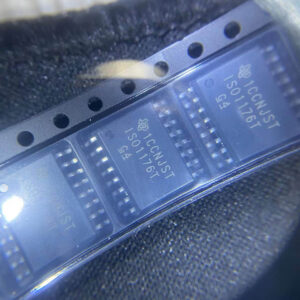
ISO1176TDWR

Isolated RS-485 transceiver, 40Mbps, integrated transformer driver, SOIC-16

Brand: TI

Package: SOIC-16 (DW, wide-body, 10.3 x 10.3 mm)

IN STOCK: 6874pcs

Cargo cycle: 3-7 Days

The minimum order is 1

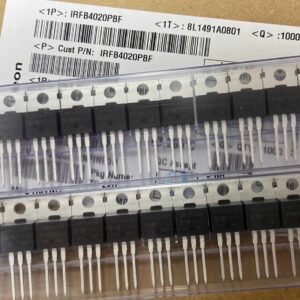
IRFB4020PBF

200V N-Channel HEXFET Power MOSFET, 31A, 68 mΩ RDS(on), TO-220AB

Brand: infineon

Package: TO-220AB

IN STOCK: 14149pcs

Cargo cycle: 3-7 Days

The minimum order is 1

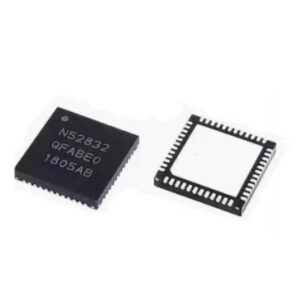
NRF52832-QFAA-T

Nordic BLE SoC, ARM Cortex-M4 @ 64MHz, 64KB Flash, 32KB RAM, QFN-48

Package: See datasheet

IN STOCK: 10958pcs

Cargo cycle: 3-7 Days

The minimum order is 1

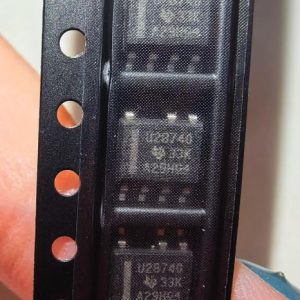
UCC28740DR

CVCC Flyback Controller, 700V startup, opto feedback, <10mW no-load, SOIC-7

Brand: TI

Package: SOIC-7 (4.9 x 3.9 x 1.75 mm)

IN STOCK: 4840pcs

Cargo cycle: 3-7 Days

The minimum order is 1

MMUN2211LT1G

NPN digital transistor, R1=10kΩ R2=10kΩ, 50V, 100mA, SOT-23-3, pre-biased BRT switch

Brand: Onsemi

Package: SOT-23-3 (TO-236, SC-59)

IN STOCK: 8500pcs

Cargo cycle: 3-7 Days

The minimum order is 1

TMS320F2810PBKA

C2000 Delfino DSP controller, 150MHz, 128KB Flash, BGA-179

Brand: TI

Package: BGA-179 (16 x 16 mm, PBK package)

IN STOCK: 3124pcs

Cargo cycle: 3-7 Days

The minimum order is 1