
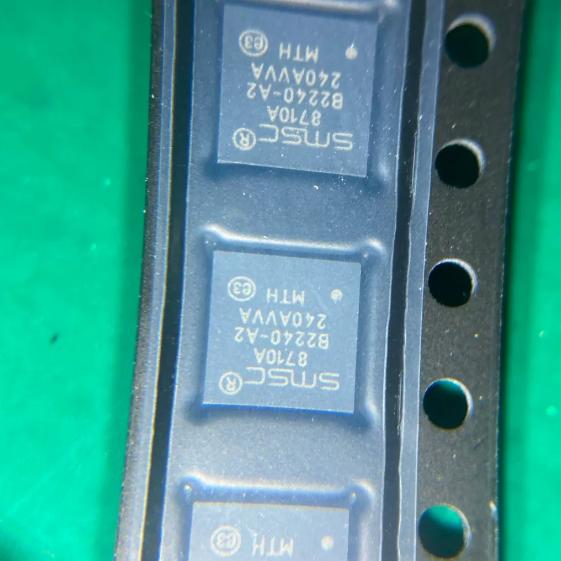
The LAN8710A-EZC-TR is a 10/100 Ethernet PHY transceiver from Microchip Technology in a QFN-32 (5×5 mm) package. It supports 10BASE-T and 100BASE-TX via MII or RMII MAC interface with HP Auto-MDIX, auto-negotiation, and flexPWR variable I/O voltage (1.6V-3.6V). Features include an integrated 3.3V-to-1.2V regulator, 25 MHz crystal oscillator, two configurable LED outputs, and multiple low-power modes including energy detect standby. Compliant with IEEE 802.3-2005, it dissipates 176 mW and operates at 0°C to +70°C (extended commercial). RoHS compliant with MSL-3 rating.
Home » Integrated Circuits ICs, Interface ICs » LAN8710A-EZC-TR
LAN8710A-EZC-TR
10/100 Ethernet PHY transceiver, MII/RMII, HP Auto-MDIX, flexPWR, QFN-32 (5×5 mm), tape and reel
70000
Effective Inventory
Manufacturer Part:
LAN8710A-EZC-TR
Package:
QFN-32 (5 x 5 mm)
Brand:
Product Categories:
Quality Commitment
Shipping & Payment
Service & Packaging
Product Manual
Other recommendations you may be interested in.
Description
Product Introduction: LAN8710A-EZC-TR Product Introduction
The LAN8710A-EZC-TR is a high-performance, small-footprint, low-power 10BASE-T/100BASE-TX Ethernet physical layer (PHY) transceiver manufactured by Microchip Technology (formerly SMSC). It is fully compliant with IEEE 802.3-2005 standards for both 10 Mbps (10BASE-T) and 100 Mbps (100BASE-TX) operation, and supports half-duplex and full-duplex modes.
The LAN8710A is the industry’s smallest footprint 10/100 Ethernet PHY solution, offering up to 40% lower power consumption than previous Microchip transceivers. It features an integrated 3.3V to 1.2V linear voltage regulator, reducing external component count and BOM cost. The flexPWR technology supports a flexible I/O voltage range from 1.6V to 3.6V, enabling direct connection to MACs operating at 1.8V, 2.5V, or 3.3V logic levels without level translators.
Key features include HP Auto-MDIX (Automatic MDI/MDI-X crossover detection and correction), eliminating the need for crossover cables; auto-negotiation for automatic speed and duplex selection; automatic polarity detection and correction; and link status change wake-up detection for energy-efficient standby modes. The device supports both standard MII (Media Independent Interface) and the reduced pin-count RMII (Reduced MII) for MAC connection, configurable via strap pins or SMI registers.
The LAN8710A-EZC-TR provides integrated ESD protection components, supports a low-cost 25 MHz crystal for both MII and RMII modes, and includes two LED outputs for link status and activity indication. Power dissipation is 176 mW with maximum supply current of 54 mA. The -EZC-TR suffix denotes extended commercial temperature range (0°C to +70°C), QFN-32 package, and tape and reel packaging.
Working Principle: LAN8710A-EZC-TR Working Principle
The LAN8710A-EZC-TR operates as an Ethernet physical layer transceiver, providing the analog front-end and signal processing between the Ethernet cable (MDI) and the MAC layer (MII/RMII digital interface).
100BASE-TX Transmit Path: The MAC transfers 4-bit nibbles of TX data via the MII (or 2-bit via RMII) at 25 MHz. The PHY encodes the data using 4B/5B coding, scrambles the bit stream to reduce EMI, and then performs MLT-3 (Multi-Level Transmit-3) line encoding. The resulting three-level signal is shaped by an internal transmit filter to meet IEEE 802.3 spectral templates, then driven as a differential signal onto the twisted-pair cable through the TXP/TXM pins via an external 1:1 isolation transformer (magnetics).
100BASE-TX Receive Path: The differential signal from the cable enters through the RXP/RXM pins via magnetics. An adaptive equalizer compensates for cable loss and intersymbol interference. The signal is then processed through a baseline wander corrector, MLT-3 decoder, descrambler, 5B/4B decoder, and presented as 4-bit nibbles to the MAC via MII at 25 MHz. A SQUELCH circuit rejects differential voltages below 300 mV to suppress noise.
10BASE-T Operation: At 10 Mbps, the PHY uses Manchester encoding. Data is transmitted as differential Manchester-encoded signals at 2.5 MHz symbol rate. Normal Link Pulses (NLPs) are transmitted during idle periods to maintain link integrity. The receiver recovers clock from the Manchester signal using a 10M PLL, decodes the data, and presents it to the MAC via MII at 2.5 MHz.
Auto-Negotiation: At power-up or link reconnect, the device transmits Fast Link Pulses (FLPs) to advertise its capabilities (speed, half/full duplex). The remote partner responds with its own FLPs, and both devices agree on the highest common mode. This process is fully automatic per IEEE 802.3u Clause 28.
HP Auto-MDIX: The transceiver automatically detects whether the connected cable is a straight-through or crossover configuration and internally swaps the TX and RX pairs as needed. This eliminates the requirement for specific cable types and prevents link failures due to incorrect cabling.
MII/RMII Interface: The PHY connects to the MAC via either the standard MII (16 signals: TXCLK, TXEN, TXD[3:0], RXCLK, RXDV, RXD[3:0], RXER, COL, CRS) at 25 MHz or the compact RMII (7 signals: REF_CLK, TXEN, TXD[1:0], RXDV, RXD[1:0], RXER) at 50 MHz. The interface mode is selected by configuration straps at reset.
SMI (Serial Management Interface): The MDIO/MDC interface provides register-level access for configuration, status monitoring, and advanced features such as loopback mode, power-down control, and PHY address assignment. Up to 7 PHY devices can share a single SMI bus using 3-bit PHY address configuration.
Power Management: The device supports multiple low-power modes including energy detect standby (powers down when no link partner detected), power-down mode via register, and general power-down via strap pin. The integrated 3.3V-to-1.2V linear regulator can be disabled to allow use of a more efficient external regulator for further power savings.
Pin Description: LAN8710A-EZC-TR Pin Definition and Functions
| Pin Group | Pin Name | Type | Default Function | Description |
|---|---|---|---|---|
| MAC Interface | TXEN / TXD[3:0] | O | MII Transmit | Transmit enable and 4-bit transmit data from PHY to MAC (MII) or 2-bit TXD[1:0] (RMII) |
| MAC Interface | RXDV / RXD[3:0] / RXER | O | MII Receive | Receive data valid, 4-bit receive data, and receive error indication |
| MAC Interface | TXCLK / RXCLK | O | MII Clocks | 25 MHz transmit and receive clocks (MII mode); not used in RMII mode |
| MAC Interface | CRS / COL | O | Carrier Sense / Collision | Carrier sense and collision detect signals for half-duplex operation |
| RMII | REF_CLK | I | RMII Reference Clock | 50 MHz reference clock input for RMII mode |
| Management | MDIO / MDC | I/O / I | SMI Data / Clock | Serial management interface for register access |
| Line Side | TXP / TXN | O | Transmit ± | Differential transmit output to Ethernet magnetics |
| Line Side | RXP / RXN | I | Receive ± | Differential receive input from Ethernet magnetics |
| LED | LED1 / LED2 | O | Status LEDs | Link/activity status LED outputs; configurable via registers |
| Clock | XTAL1 / XTAL2 | I / O | Crystal Oscillator | 25 MHz crystal connections or external clock input on XTAL1 |
| Power | VDD33 / VDDIO / GND | P / G | Power / Ground | 3.3V analog supply, variable I/O supply (1.6-3.6V), ground |
| Reset | nRST | I | Hardware Reset | Active-low reset; internal power-on reset circuit included |
Application Scenarios: In which products and applications is LAN8710A-EZC-TR used
| Application | Description |
|---|---|
| Embedded Ethernet Connectivity | Adding 10/100 Ethernet to microcontrollers, SoCs, and FPGAs via MII or RMII interface; smallest PHY footprint minimizes board area |
| Consumer Electronics | HDTVs, set-top boxes, DVRs, gaming consoles, and network printers requiring cost-effective Ethernet with HP Auto-MDIX for plug-and-play cabling |
| Industrial Automation | Industrial -EZR-TR variant (-40°C to +85°C) for PLCs, embedded controllers, and POS terminals in factory environments |
| IoT Gateways | Wired Ethernet backhaul for IoT gateways and smart home hubs; low-power standby modes enable energy-efficient always-on connectivity |
| Single-Board Computers | RMII-based Ethernet PHY for SBC and compute module designs where minimal pin count and flexible I/O voltage are critical |
Alternative Models: What chips are recommended as replacements for LAN8710A-EZC-TR
| Model | Manufacturer | Compatibility | Key Difference |
|---|---|---|---|
| LAN8710Ai-EZC-TR | Microchip | Pin-Compatible / Drop-in | Industrial temperature range (-40°C to +85°C); same silicon, wider temp spec; preferred for industrial and automotive |
| LAN8740A | Microchip | Pin-Compatible | Next-generation 10/100 PHY with improved ESD and EMI performance; register-compatible; recommended migration path per Microchip AN25.3 |
| LAN8720A | Microchip | Pin-Compatible | RMII-only variant (no MII); fewer pins needed; 24-pin QFN package; lower cost for RMII-only designs |
| DP83848C | TI | Functionally Similar | 10/100 PHY, MII/RMII, 48-pin LQFP; larger package, different pinout; supports MII and RMII |
| KSZ8041NL | Microchip | Functionally Similar | 10/100 PHY, RMII, 32-pin QFN; similar footprint; different register map and strap configuration |
Recommend Parts
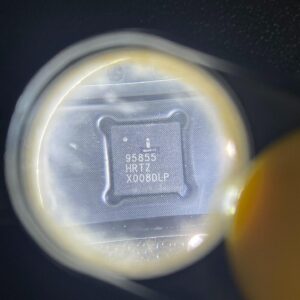
ISL95855HRTZ-T
IMVP8 3+2+1 phase buck controller, R3 technology, 4.5-25V input, 48-TQFN
Brand: Renesas
Package: 48-TQFN (6×6 mm, exposed pad)
IN STOCK: 2156pcs
Cargo cycle: 3-7 Days
The minimum order is 1
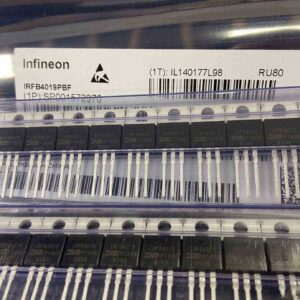
IRFB4019PBF
150V N-Channel HEXFET Power MOSFET, 47A, 34 mΩ RDS(on), TO-220AB
Brand: infineon
Package: TO-220AB
IN STOCK: 2409pcs
Cargo cycle: 3-7 Days
The minimum order is 1
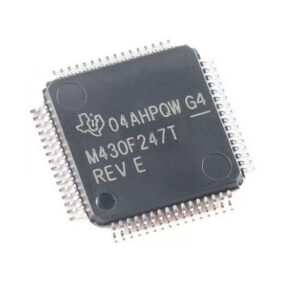
MSP430F247TPMR
TI MSP430 MCU, 16-bit RISC, 92KB Flash, 8KB RAM, 16MHz, LQFP-64
Brand: texas-instruments
Package: See datasheet
IN STOCK: 13371pcs
Cargo cycle: 3-7 Days
The minimum order is 1
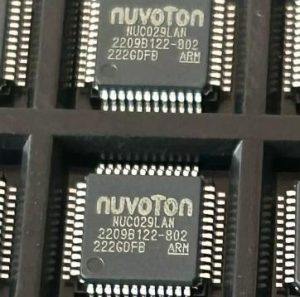
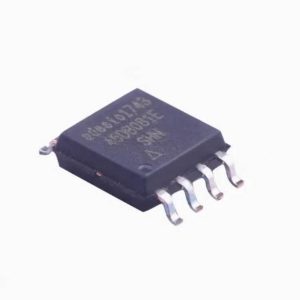
AT45DB081E-SHN-T
8Mbit DataFlash, dual-SPI 85MHz, 2x264B SRAM buffers, USON-8 (4x3mm), page-based ECC
Brand: Renesas
Package: USON-8 (4 x 3 x 0.6mm, 0.8mm pitch)
IN STOCK: 4500pcs
Cargo cycle: 3-7 Days
The minimum order is 1
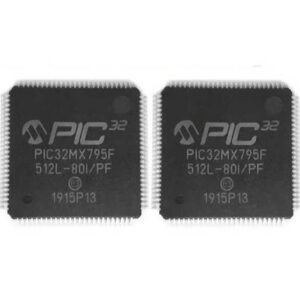
PIC32MX795F512L-80I/PF
32-bit PIC32MX MCU with Ethernet/CAN/USB, 80MHz, 512KB Flash, TQFP-100, industrial
Brand: MICROCHIP
Package: TQFP-100 (14 x 14 mm)
IN STOCK: 7912pcs
Cargo cycle: 3-7 Days
The minimum order is 1