
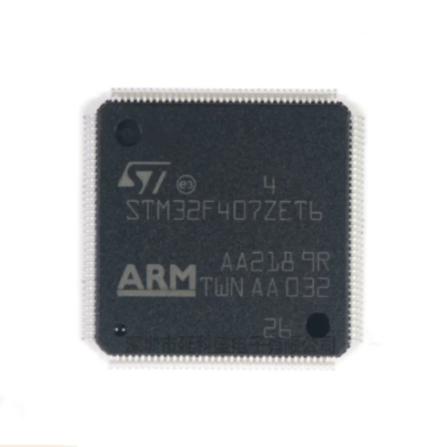
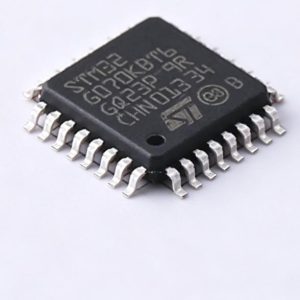
The STM32F207ZET is a high-performance ARM Cortex-M3 microcontroller from STMicroelectronics running at 120 MHz in an LQFP-144 (20×20 mm) package. It features 512 KB Flash, 128 KB SRAM, ART Accelerator for zero-wait-state Flash execution (150 DMIPS, 398 CoreMark). Peripherals: 3x 12-bit ADC (6 MSPS interleaved), 2x 12-bit DAC, 17 timers, 16-stream DMA, 10/100 Ethernet MAC (IEEE 1588v2), 2x USB OTG (HS+FS), 2x CAN, 3x I2C, 4x USART + 2x UART, 3x SPI/I2S, SDIO, camera interface, FSMC. Supply: 1.8-3.6V. Temperature: -40C to +85C. 114 GPIO (5V tolerant). Ideal for industrial automation, networking, and consumer applications requiring Ethernet and USB connectivity.
Home » Integrated Circuits ICs, Microcontrollers (MCU) » STM32F207ZET
STM32F207ZET
120MHz ARM Cortex-M3 MCU, 512KB Flash, 128KB SRAM, Ethernet, USB OTG, LQFP-144
962
Effective Inventory
Manufacturer Part:
STM32F207ZET
Package:
LQFP-144 (20 x 20 mm)
Brand:
Product Categories:
Quality Commitment
Shipping & Payment
Service & Packaging
Product Manual
Other recommendations you may be interested in.
Description
Product Introduction: STM32F207ZET Product Introduction
The STM32F207ZET is a high-performance 32-bit microcontroller from STMicroelectronics based on the ARM Cortex-M3 core operating at up to 120 MHz. It belongs to the STM32F2x7 connectivity line, which adds Ethernet MAC and camera interface capabilities over the STM32F205 base line. The device is housed in a 144-pin LQFP package providing up to 114 GPIO pins.
The STM32F207ZET features 512 Kbytes of Flash memory, 128 Kbytes of SRAM (112 KB main + 16 KB CCM), and 4 Kbytes of backup SRAM. The ART Accelerator (Adaptive Real-Time memory accelerator) enables zero-wait-state execution from Flash at 120 MHz, delivering 150 DMIPS (1.25 DMIPS/MHz, Dhrystone 2.1) and 398 CoreMark performance.
The device integrates an extensive peripheral set: three 12-bit ADCs (up to 6 MSPS in triple interleaved mode, 24 channels total), two 12-bit DACs, 17 timers (twelve 16-bit and two 32-bit general-purpose timers, plus basic timers), and 16-stream DMA controller with centralized FIFOs and burst support.
Connectivity is a key differentiator of the F207 line: it includes 10/100 Ethernet MAC with IEEE 1588v2 hardware support (MII/RMII), two USB OTG controllers (one HS with ULPI, one FS with on-chip PHY), two CAN 2.0B controllers, three I2C (SMBus/PMBus), four USARTs plus two UARTs (up to 7.5 Mbit/s), three SPI (30 Mbit/s, two with I2S and audio PLL), SDIO, and an 8-to-14-bit parallel camera interface (48 MB/s max).
The Flexible Static Memory Controller (FSMC) supports Compact Flash, SRAM, PSRAM, NOR, and NAND memories via the 144-pin packages external address/data bus. A true random number generator (RNG) and CRC calculation unit are also included.
The ZET suffix decodes as: Z = LQFP-144 package, E = 512 KB Flash, T = industrial temperature range (-40C to +85C). The STM32F207ZET6 variant (6 = tray packaging) is the standard ordering part number. Power supply range is 1.8V to 3.6V with dynamic voltage scaling, and low-power modes include Sleep, Stop, and Standby with VBAT supply for RTC and backup domain.
The device is pin-compatible with other STM32F20x LQFP-144 variants (STM32F205ZE, STM32F207ZG), enabling easy Flash density scaling from 256 KB to 1 MB on the same PCB layout.
Working Principle: STM32F207ZET Working Principle
The STM32F207ZET operates as a 32-bit ARM Cortex-M3 microcontroller with a sophisticated multi-bus architecture optimized for high throughput and deterministic real-time performance.
ARM Cortex-M3 Core: The Cortex-M3 processor features a 3-stage pipeline, hardware division (2-12 cycles), single-cycle multiply, bit-band support for atomic bit manipulation, and a Nested Vectored Interrupt Controller (NVIC) with up to 81 interrupt channels and 16 priority levels. The built-in Memory Protection Unit (MPU) allows privileged software to define memory regions with access permissions, enabling operating system implementations like RTOS to isolate tasks. The core supports two operating modes (Thread and Handler) and two privilege levels, providing a foundation for secure embedded software.
ART Accelerator: The ART Accelerator is a critical performance enabler. Flash memory access at 120 MHz normally requires wait states (3-4 cycles for 90nm Flash at 120 MHz). The ART Accelerator uses a 64-line instruction cache, an 8-line literal cache, and a 64-line branch cache (with branch folding) to hide Flash wait states. When the access pattern hits in the accelerator cache, the CPU sees zero-wait-state performance. ST benchmarks demonstrate 150 DMIPS and 398 CoreMark, which is the theoretical maximum for Cortex-M3 at 120 MHz. Without ART, the same CPU would deliver approximately 115 DMIPS due to Flash wait states.
Multi-AHB Bus Matrix: The STM32F207 employs an 8-master, 7-slave multi-AHB bus matrix connecting the CPU D-bus, I-bus, and S-bus, DMA1, DMA2, Ethernet DMA, USB HS DMA, and the DMA of the camera interface to memories and peripherals. The bus matrix allows concurrent accesses from multiple masters to different slaves (e.g., CPU fetching code from Flash while DMA reads SRAM), significantly increasing sustained throughput. The matrix runs at the full AHB frequency (120 MHz), providing 480 MB/s bandwidth per master port.
Memory Subsystem: The 512 KB Flash is organized as 2 KB sectors (4 KB for the first 4 sectors) supporting erase/program operations. The 128 KB SRAM is split into 112 KB main SRAM (0x20000000) accessible by all bus masters, and 16 KB Core-Coupled Memory (CCM, 0x10000000) accessible only by the CPU D-bus at full speed with zero-wait-state access. The CCM is ideal for time-critical data, stack, or ISR code. The 4 KB backup SRAM in the VBAT domain retains data even in Standby mode.
DMA Controller: The 16-stream DMA controller with dedicated FIFOs supports burst transfers (4/8/16 beats), circular mode, and double-buffer mode. Each stream can be configured with priority levels and supports memory-to-memory, memory-to-peripheral, and peripheral-to-memory transfers. The centralized FIFOs allow the DMA to absorb latency mismatches between source and destination, preventing data loss in high-speed peripherals like SPI at 30 Mbit/s.
Ethernet MAC: The 10/100 Ethernet MAC implements IEEE 802.3 with dedicated DMA and FIFO. The MII/RMII interface connects to an external PHY. IEEE 1588v2 hardware support provides sub-microsecond time stamping for precision time protocol (PTP) applications. The DMA descriptor ring architecture supports scatter-gather DMA, reducing CPU intervention in packet processing.
Power Management: The internal voltage regulator steps 1.8-3.6V VDD down to 1.2V for the core. Dynamic voltage scaling is not available on F2 (it is on F4), but the device supports Sleep (CPU halted, peripherals running), Stop (all clocks stopped, SRAM and register contents preserved), and Standby (only RTC and backup domain alive, SRAM lost) modes. VBAT supply (1.65-3.6V) maintains the RTC, 20 backup registers, and 4 KB backup SRAM when VDD is removed.
Pin Description: STM32F207ZET Pin Definition and Functions
| Pin Group | Pin Count | Type | Key Functions |
|---|---|---|---|
| PA0-PA15 | 16 | I/O (5V tolerant) | ADC1/2 channels, USART2/6, TIM2/5, I2C1, SPI1, USB OTG FS, ETH_MII/RMII, JTCK/SWCLK, JTDI |
| PB0-PB15 | 16 | I/O (5V tolerant) | ADC1/2 channels, I2C1/2, SPI2/3, I2S2/3, CAN1/2, TIM1/3/4, SDIO, ETH_MII |
| PC0-PC15 | 16 | I/O (5V tolerant) | ADC1/2/3 channels, FSMC, SDIO, SPI2/3, USART3, I2S2/3, ETH_MII/RMII |
| PD0-PD15 | 16 | I/O (5V tolerant) | FSMC data/address, CAN1/2, USART2/3, UART4/5, SPI2/3, I2C2 |
| PE0-PE15 | 16 | I/O (5V tolerant) | FSMC data/address/control, TIM1/9/10/11, UART4/5, FMC |
| PF0-PF15 | 16 | I/O (5V tolerant) | FSMC address/control, ADC3, TIM5/11 |
| PG0-PG15 | 16 | I/O (5V tolerant) | FSMC chip select/control, ETH_MII, USART6 |
| PH0-PH15 | 16 | I/O (5V tolerant) | OSC_IN/OUT, ETH_MII, TIM8, I2C3, OTG HS ULPI, Camera |
| PI0-PI11 | 12 | I/O (5V tolerant) | Camera, ETH_MII, SPI2/3, I2S2/3, TIM8, OTG HS ULPI |
| NRST | 1 | I | System reset, active-low, with pull-up |
| BOOT0 | 1 | I | Boot mode selection (Main Flash / System Memory / SRAM) |
| VBAT | 1 | P | Battery backup supply for RTC and backup domain (1.65-3.6V) |
| VDD (multiple) | ~12 | P | Digital power supply, 1.8-3.6V, each must be connected |
| VSS (multiple) | ~12 | G | Digital ground |
| VDDA/VSSA | 2 | P/G | Analog supply/ground for ADC, DAC, reset, and RC oscillators |
| VREF+ | 1 | P | ADC external reference voltage (optional, can tie to VDDA) |
| VCAP1/VCAP2 | 2 | P | Internal voltage regulator output, 2.2uF cap to GND each |
Application Scenarios: In which products and applications is STM32F207ZET used
| Application | Description |
|---|---|
| Industrial Automation | Real-time motor control with advanced PWM timers, Ethernet-based industrial protocols (Profinet, EtherNet/IP), CAN bus for fieldbus communication, FSMC for external memory expansion |
| Networking and Communication | IEEE 1588v2 precision time protocol for synchronized network nodes, dual CAN for gateway applications, 10/100 Ethernet MAC for embedded web servers and IoT connectivity |
| Consumer Electronics | USB OTG for device/host dual-role, camera interface for imaging devices, audio I2S with dedicated PLL for HiFi audio playback, SDIO for storage |
| Medical Devices | Multi-channel 12-bit ADC for vital sign monitoring, 17 timers for precise timing control, DMA for low-latency data acquisition, Ethernet for telemedicine connectivity |
| Building Automation | CAN bus for HVAC and lighting control, Ethernet for BACnet/IP, low-power modes for battery-backed nodes, FSMC for large display interfaces |
Alternative Models: What chips are recommended as replacements for STM32F207ZET
| Model | Manufacturer | Compatibility | Key Difference |
|---|---|---|---|
| STM32F207ZGT6 | ST | Pin-Compatible | 1MB Flash (vs 512KB); same package, pinout, and peripherals; drop-in upgrade for more code space |
| STM32F205ZET6 | ST | Pin-Compatible | No Ethernet MAC or camera interface; otherwise identical peripherals and memory; lower cost option |
| STM32F407ZET6 | ST | Pin-Compatible | Cortex-M4F core with DSP and FPU; 168 MHz; pin-compatible LQFP-144; higher performance upgrade path |
| STM32F217ZET6 | ST | Pin-Compatible | Same as F207 plus hardware crypto (AES 128/192/256, 3DES, MD5, SHA-1); for secure applications |
| NXP LPC1857 | NXP | Functionally Similar | Cortex-M3 at 180 MHz, dual-bank Flash, Ethernet, USB; different peripheral mix and pinout |
Recommend Parts
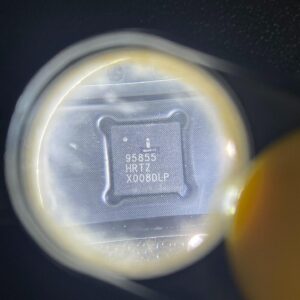
ISL95855HRTZ-T
IMVP8 3+2+1 phase buck controller, R3 technology, 4.5-25V input, 48-TQFN
Brand: Renesas
Package: 48-TQFN (6×6 mm, exposed pad)
IN STOCK: 2156pcs
Cargo cycle: 3-7 Days
The minimum order is 1
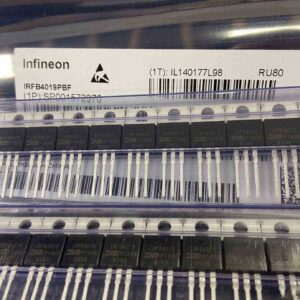
IRFB4019PBF
150V N-Channel HEXFET Power MOSFET, 47A, 34 mΩ RDS(on), TO-220AB
Brand: infineon
Package: TO-220AB
IN STOCK: 2409pcs
Cargo cycle: 3-7 Days
The minimum order is 1
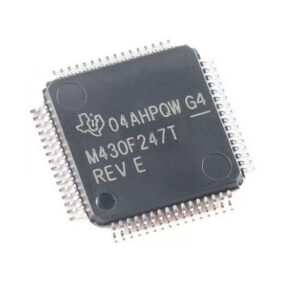
MSP430F247TPMR
TI MSP430 MCU, 16-bit RISC, 92KB Flash, 8KB RAM, 16MHz, LQFP-64
Brand: texas-instruments
Package: See datasheet
IN STOCK: 13371pcs
Cargo cycle: 3-7 Days
The minimum order is 1
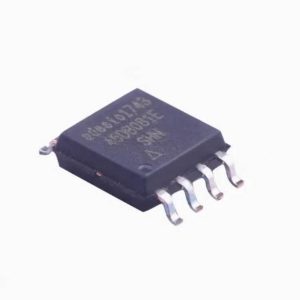
AT45DB081E-SHN-T
8Mbit DataFlash, dual-SPI 85MHz, 2x264B SRAM buffers, USON-8 (4x3mm), page-based ECC
Brand: Renesas
Package: USON-8 (4 x 3 x 0.6mm, 0.8mm pitch)
IN STOCK: 4500pcs
Cargo cycle: 3-7 Days
The minimum order is 1
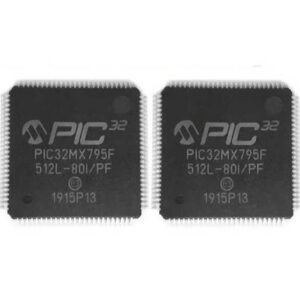
PIC32MX795F512L-80I/PF
32-bit PIC32MX MCU with Ethernet/CAN/USB, 80MHz, 512KB Flash, TQFP-100, industrial
Brand: MICROCHIP
Package: TQFP-100 (14 x 14 mm)
IN STOCK: 7912pcs
Cargo cycle: 3-7 Days
The minimum order is 1